Alchemy Beyond Gold: The Great Work and the Hidden Art of Transformation
Updated: Sep 17

When most people hear the word alchemy, they imagine secret laboratories, strange symbols and men bent over furnaces trying to turn lead into gold. That image is not entirely wrong—but it is incomplete. Alchemy was a real historical practice concerned with substances, metals, medicines and transformation. Over centuries, it also accumulated a rich symbolic language that later readers would interpret as a map of inner change.
The deeper fascination of alchemy lies in this double vision. Matter could be worked upon, purified, separated and recombined. But the person doing the work could also be changed by the search itself. The laboratory and the seeker began to mirror one another.
What Was Alchemy Really?
Alchemy was not one single tradition with one fixed doctrine. Forms of alchemical thought and practice developed in the Hellenistic Mediterranean, the Islamic world, medieval Europe, India and China, each with its own history and aims. European alchemy inherited important ideas and texts through Arabic scholarship and translation, while also developing its own Christian, philosophical and symbolic interpretations.
Historical alchemists experimented with real materials. They distilled liquids, heated metals, prepared compounds, developed apparatus and recorded reactions. Their work existed before the boundaries between chemistry, medicine, philosophy and spirituality took the modern forms we know today.
To dismiss alchemy as nothing more than failed chemistry misses the world in which it existed. To describe it only as a secret spiritual psychology misses the physical work. It was often both practical and philosophical, and its meaning changed from one writer and century to another.
Why Gold?
Gold held an unusual place in the alchemical imagination. It resisted corrosion, kept its brilliance and seemed unusually stable. To an alchemist living in a world where metals rusted, tarnished and decayed, gold could appear almost perfected.
The dream of transmuting a lesser metal into gold was therefore not simply a desire for wealth. It also raised a larger question: if nature transforms substances over time, could the skilled practitioner understand that process and bring it to completion?
That question opened the door to symbolism. If an imperfect metal could be purified and transformed, what about the human being? Could confusion become understanding? Could divided parts of the self be reconciled? Could something hidden within ordinary life be brought into a more complete form?
The Philosopher’s Stone
The philosopher’s stone became the legendary goal of Western alchemy: a substance believed capable of assisting metallic transmutation and, in some traditions, connected with extraordinary healing or longevity. Descriptions varied, and alchemical texts often concealed their processes behind symbolic language.
Over time, the stone became more than an imagined material substance in the cultural imagination. Later spiritual and psychological interpreters treated it as a symbol of completion, integration or awakened potential.
It is important to distinguish those later interpretations from every historical alchemist’s literal intention. The symbolism is powerful, but alchemy’s history is too diverse to reduce to a single hidden message.
The Great Work
The phrase Great Work, or Magnum Opus, came to describe the alchemical undertaking of transformation. In later presentations, this work is often organized into symbolic stages associated with colors and processes: blackening, whitening, yellowing and reddening. Historical schemes varied, and not every text used an identical sequence.
What endures is the underlying image: transformation does not happen all at once. Something is broken down. Something is purified. Opposites are brought into relationship. A new form emerges.
This is one reason alchemical language continues to feel strangely modern. Human change often follows a similar rhythm. Old identities can dissolve before a new direction becomes visible. Periods of uncertainty can precede clarity. Growth can require us to encounter what we would rather leave untouched.
Solve et Coagula: Dissolve and Recombine
One of the ideas commonly associated with alchemical practice is solve et coagula—dissolve and coagulate, or break apart and bring together again. In the laboratory, these were material operations. Symbolically, the phrase became a compelling description of transformation itself.
We often try to change by adding something new: a new belief, habit, identity or goal. Alchemy suggests another possibility. Before something new can become stable, an old structure may have to be examined and loosened. What no longer belongs may need to fall away.
Then comes the second movement: recombination. The goal is not endless dissolution. Pieces are gathered differently. Experience is integrated. A new pattern is formed.
Alchemy and the Emerald Tablet
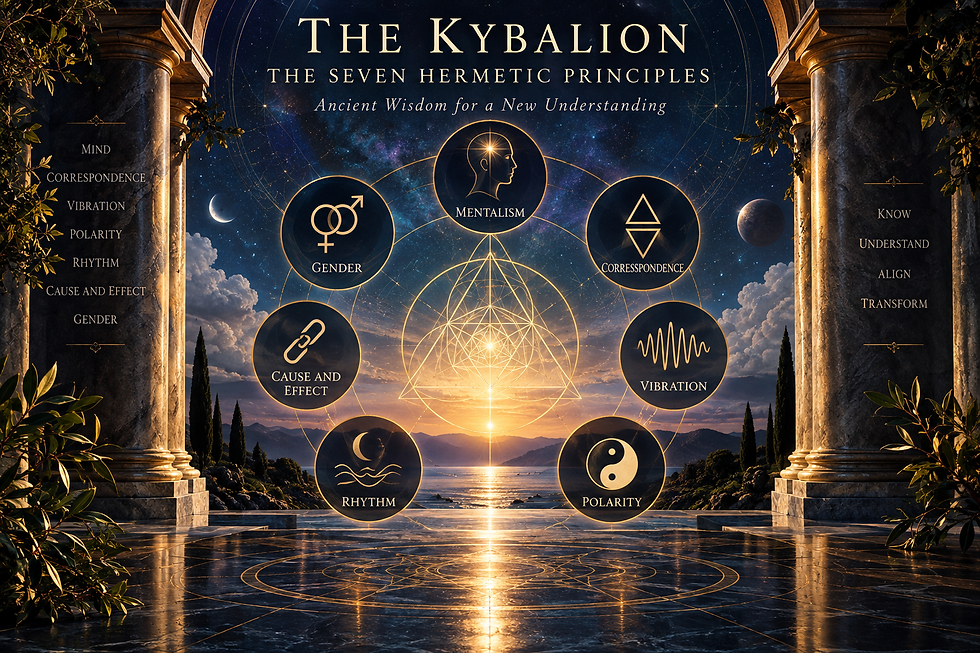
The Emerald Tablet became one of the most famous texts associated with alchemical tradition. Its cryptic language speaks of correspondence, separation and the movement between what is above and what is below. Generations of readers treated it as a compressed key to the mysteries of transformation.
That connection becomes clearer in As Above, So Below: The Emerald Tablet and the Hidden Meaning of Hermetic Wisdom, where we explore the history of the tablet and the idea of correspondence between the greater cosmos and the smaller world of human experience.
Together, Hermeticism and alchemy helped create a worldview in which nature was not merely dead matter. It could be read, investigated and transformed. Symbols, substances and cosmic relationships could all become part of the same search for understanding.
Why Was Alchemical Writing So Secretive?
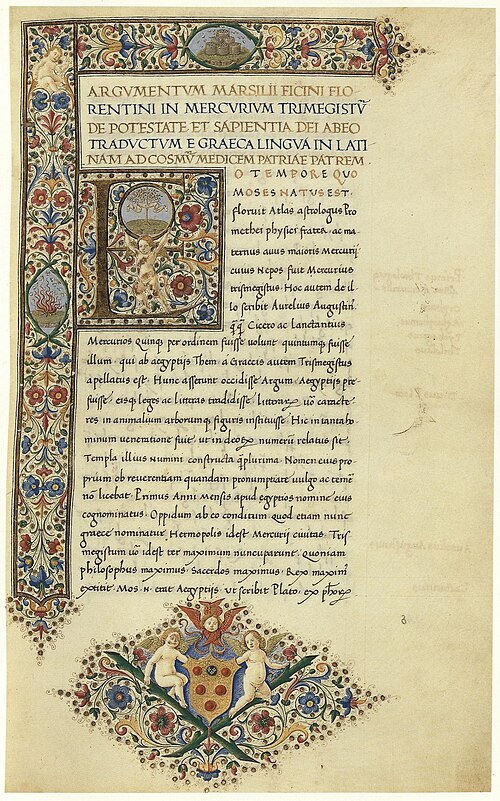
Anyone opening an old alchemical manuscript may encounter dragons, suns and moons, kings and queens, birds, lions, strange vessels and impossible landscapes. The imagery can look deliberately impenetrable—and sometimes it was.
Alchemical knowledge circulated in cultures where specialized techniques could be valuable, dangerous, religiously sensitive or reserved for initiated practitioners. Writers also inherited traditions of allegory and symbolic teaching. On top of that, technical processes were difficult to describe consistently before modern chemical language existed.
The result is a literature in which practical instruction and symbolic meaning can be difficult to separate. That ambiguity is frustrating for historians, but it is also part of what has kept alchemy alive in the imagination.
Carl Jung and the Inner Alchemist
In the twentieth century, psychiatrist Carl Jung gave alchemical symbolism a new life by interpreting it through depth psychology. Jung believed that alchemists had projected unconscious psychological processes onto the materials and images of their work. He saw parallels between alchemical transformation and what he called individuation—the process of becoming a more integrated self.
Jung’s interpretation was not a neutral description of what all historical alchemists believed. It was a modern psychological reading. But it profoundly shaped the way many people now understand alchemy as a language for inner transformation.
Through that lens, the dark stages of alchemy can resemble confrontation with the shadow or the unknown; separation can resemble discernment; union can suggest the integration of previously divided aspects of the psyche.
Alchemy, Science and the Search for Knowledge
Alchemy also belongs to the long and complicated ancestry of modern chemistry. Early practitioners developed laboratory techniques, worked with acids, salts, minerals and metals, and transmitted practical knowledge across cultures. Modern chemistry eventually rejected many alchemical theories while retaining and refining parts of the experimental tradition.
This history makes alchemy especially fitting for the meeting place between soul and science. It reminds us that the categories we now treat as separate were not always separate. The same person might once have asked what matter is, how nature changes, what the cosmos means and how a human being should live.
The answers were not always correct by modern scientific standards. But the questions were enormous.
The Alchemical Question That Remains
We no longer need alchemy to explain chemical reactions. Science has given us far more reliable ways to understand matter. Yet the old alchemical images have not disappeared because the deeper problem of transformation remains.
How does a person truly change? What must be released, purified, integrated or understood? Why do periods of darkness sometimes precede periods of clarity? And is there something within us that becomes visible only through the work of transformation?
These questions do not require us to believe that lead can be turned into gold. They ask something more personal.
Perhaps the enduring secret of alchemy is not that ancient practitioners possessed one hidden formula that could solve everything. Perhaps it is that transformation itself was worthy of a lifetime of attention—that the ordinary may contain possibilities not yet revealed, and that the seeker is never entirely separate from the work being done.
The Great Work Within
The old alchemists looked into furnaces, vessels and changing substances and searched for the laws of transformation. Centuries later, we can look at their symbols and recognize another laboratory: human experience itself.
We are continually dissolving and rebuilding. Beliefs change. Identities loosen. Loss strips away what once seemed permanent. Insight rearranges what we thought we knew. Something ends, and something else begins to take form.
That is why the Great Work still speaks to us. Gold was the image of perfection, but transformation was the mystery. And the mystery remains.

$50
Product Title
Product Details goes here with the simple product description and more information can be seen by clicking the see more button. Product Details goes here with the simple product description and more information can be seen by clicking the see more button

$50
Product Title
Product Details goes here with the simple product description and more information can be seen by clicking the see more button. Product Details goes here with the simple product description and more information can be seen by clicking the see more button.
$50
Product Title
Product Details goes here with the simple product description and more information can be seen by clicking the see more button. Product Details goes here with the simple product description and more information can be seen by clicking the see more button.

Comments