Who Was Mikao Usui? The True Story Behind the Origins of Reiki
Updated: Sep 20
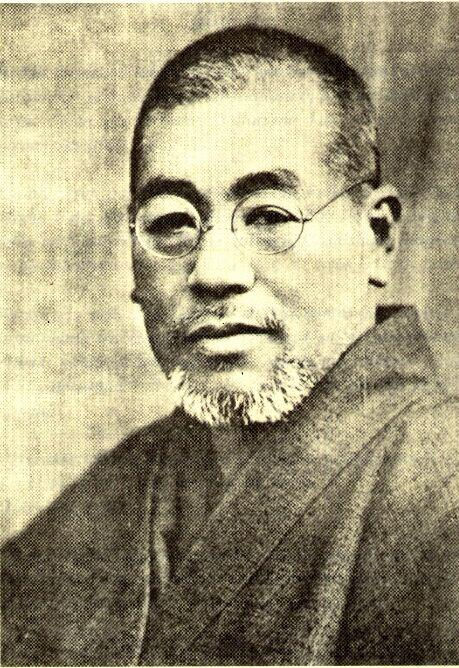
Before Reiki became a worldwide healing practice, it began with one Japanese seeker and a story that has been retold so many times that history and legend are sometimes difficult to separate.
Mikao Usui is commonly described as the founder of the system now known as Usui Reiki. His name appears in Reiki lineages across the world, yet many popular accounts of his life were shaped decades after his death and adapted as the practice moved from Japan to the West.
Looking more closely at Usui does not diminish Reiki. It makes its history more interesting. Behind the simplified origin story was a man living during a period of enormous religious, cultural and social change in Japan—and a healing practice that continued evolving after him.
Who Was Mikao Usui?
Mikao Usui was born in Japan in 1865 and died in 1926. He lived during the Meiji and Taisho eras, when Japan was undergoing rapid modernization while older religious and philosophical traditions continued to shape everyday life.
Reliable details about every stage of his life are limited. Much of what is known comes from Japanese sources associated with his students and memorial inscription, while later Western biographies sometimes added stories that are difficult to verify historically.
This is important because Reiki's history is often presented as one seamless biography when it is actually a mixture of documented information, oral transmission and later interpretation.
The Search That Led to Reiki
Reiki tradition describes Usui as a lifelong seeker interested in spiritual development and the deeper questions of human existence.
Accounts connect him with Buddhist practice and other currents of Japanese spirituality, although claims about exactly what he studied vary between sources.
The central turning point in Reiki tradition is associated with Mount Kurama, north of Kyoto.
Usui is said to have undertaken an intensive period of fasting and spiritual practice there. During that retreat, he experienced the realization or awakening from which his healing method developed.
The details are often described differently, but Mount Kurama remains deeply connected with the Reiki origin story.
What Happened on Mount Kurama?
Popular Western versions sometimes describe a dramatic beam of light, mystical symbols appearing before Usui, or a sudden supernatural transmission of Reiki knowledge.
Those details should be approached carefully. They became prominent in later retellings and cannot all be treated as documented historical events.
What can be said more cautiously is that Usui's spiritual retreat on Mount Kurama became associated with an important personal realization and with the emergence of the practice he later taught.
For someone interested in inner wisdom, the distinction between history and interpretation is valuable. A transformative experience can be meaningful without pretending we possess a transcript of exactly what happened.
Reiki Was More Than Hands-On Healing
Modern Reiki is often introduced primarily as a hands-on energy-healing technique.
Usui's system appears to have involved something broader: personal cultivation, spiritual practice and a way of living alongside healing methods.
This broader perspective becomes especially visible in the principles associated with Reiki—guidelines encouraging practitioners to work with anger, worry, gratitude, honest work and kindness.
Reiki was therefore not simply something one person did to another. It also asked the practitioner to cultivate the self.
The Five Reiki Principles
Different translations use slightly different wording, but the Reiki precepts commonly emphasize living just for today without anger or excessive worry, practicing gratitude, working honestly and showing kindness.
Their simplicity can hide their depth.
The phrase just for today shifts attention away from mastering an entire lifetime and toward the present moment. Anger and worry are not condemned as moral failures; instead, the practitioner repeatedly returns to awareness.
In that sense, the precepts resemble contemplative disciplines found in many traditions: change begins not with abstract belief but with how consciousness meets ordinary life.
What Did Usui Mean by Healing?
The Japanese name associated with Usui's organization is often translated as the Usui Reiki Healing Method Society.
Yet healing in this context should not automatically be understood through the modern Western idea of curing a diagnosed disease.
Traditional spiritual systems frequently use healing language more broadly, encompassing balance, well-being, character, harmony and personal development.
This broader meaning helps explain why Reiki combines treatment practices with ethical and contemplative principles.
How Reiki Was Taught
Usui taught students and developed a community around the practice. Reiki training later became organized into levels, although teaching structures continued to evolve after his death.
Students learned practices involving the hands, meditation, sensitivity and spiritual cultivation. Initiatory or attunement practices also became important in Reiki transmission.
The idea of lineage remains central today: practitioners often trace their teaching line through a sequence of Reiki masters back toward Usui.
Chujiro Hayashi and the Next Stage
One of the most influential figures after Usui was Chujiro Hayashi, a Japanese naval officer who became a Reiki teacher.
Hayashi helped systematize treatment methods and operated a Reiki clinic. His approach contributed significantly to the form of Reiki that would eventually reach Western students.
The transition from Usui to Hayashi shows something important: traditions are rarely frozen at the moment of origin.
Reiki was already developing.
Hawayo Takata and Reiki's Journey West
Hawayo Takata, a Japanese American woman born in Hawaii, encountered Hayashi's Reiki practice in the 1930s and later became one of the most important figures in bringing Reiki to the West.
Through Takata, Reiki spread through Hawaii and North America and eventually into a much wider international movement.
She also transmitted stories about Reiki's origins that helped Western students understand the practice. Some of those stories are now considered historically uncertain or shaped for the cultural setting in which she was teaching.
That does not erase her importance. Without Takata, the global history of Reiki would likely look very different.
Why the History Became Complicated
Reiki moved across languages, religions and cultures.
Japanese concepts had to be explained to Western audiences. Spiritual ideas were reframed. Oral teachings changed in retelling. Students recorded what they remembered, and later teachers sometimes repeated those accounts as established history.
For years, many Western practitioners had limited access to Japanese records about Usui and early Reiki.
As researchers and practitioners examined Japanese sources more closely, a more nuanced history began emerging.
Was Reiki an Ancient Practice?
Reiki is sometimes described as an ancient healing method rediscovered by Usui.
The modern system called Reiki, however, dates to the early twentieth century and is associated with Usui's teaching.
That does not mean the ideas surrounding it appeared from nowhere. Concepts of vital energy, spiritual cultivation, meditation and healing existed in Asian traditions long before Usui.
But an older cultural background is different from claiming that the complete modern Reiki system survived unchanged from antiquity.
Reiki, Ki and the Older Idea of Life Energy
The concept of ki places Reiki within a much larger historical conversation about vitality and life.
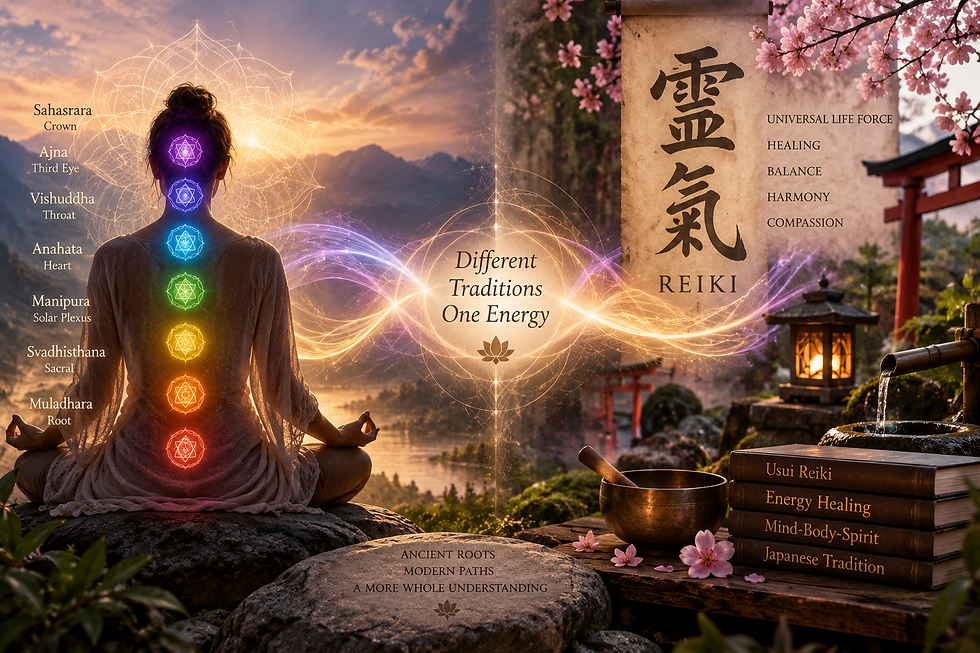
Chinese traditions speak of qi. Indian traditions developed concepts such as prana. Japanese culture inherited and transformed ideas about ki through centuries of interaction with Chinese philosophy, medicine, Buddhism and indigenous practices.
These traditions should not simply be collapsed into one universal energy theory. Their meanings, practices and histories differ.
Still, they reveal a recurring human intuition: life seems to possess an organizing vitality that older traditions tried to understand through languages very different from modern biomedicine.
What Modern Science Can—and Cannot—Say
As discussed in What Is Reiki Energy?, modern research can examine outcomes associated with Reiki sessions, including relaxation, stress, pain and well-being.
Science can also investigate touch, expectation, attention, social connection and nervous-system responses.
What it has not established is Reiki's traditional life energy as a measurable physical force comparable with electricity, heat or electromagnetic radiation.
Historical questions and scientific questions are different. Learning who Usui was cannot prove how Reiki works, just as studying physiological mechanisms cannot tell us exactly what Usui believed during his spiritual practice.
Why Usui's Story Still Matters
The appeal of Usui's story is not only that he founded a healing system.
It is the pattern underneath it: a person searching for understanding withdraws from ordinary life, enters a period of disciplined practice and returns with a changed way of seeing.
Versions of that pattern appear throughout spiritual history.
Whether every later detail of the Mount Kurama story can be verified is less important than recognizing what the story represents within Reiki: healing begins with transformation in the practitioner.
The Forgotten Spiritual Side of Reiki
As Reiki became popular as a complementary wellness practice, its spiritual-development dimension could easily fade behind the image of hands hovering above a treatment table.
But the precepts point back toward something deeper.
Reiki asks what happens when attention, compassion and daily conduct become part of healing. It suggests that the person offering the practice is also engaged in an ongoing inner discipline.
That makes Reiki relevant not only to energy healing but also to the broader Antara Veda exploration of inner knowing and conscious living.
History Without Losing the Mystery
There is a temptation with spiritual traditions to choose between two extremes.
One is to accept every origin story literally because questioning it seems disrespectful. The other is to assume that finding historical uncertainty destroys the tradition.
Neither is necessary.
Reiki's documented history is compelling on its own. A Japanese spiritual seeker developed a system in the early twentieth century. Students carried it forward. Hayashi helped reshape it. Takata carried it across cultures. Within a few generations, a practice that began in Japan had reached people around the world.
That is already an extraordinary story.
The Legacy of Mikao Usui
Usui died in 1926, only a few years after the period in which his Reiki teaching became established.
He could not have seen what the practice would become.
Today Reiki exists in hospitals, private practices, wellness centers, spiritual communities and homes across many countries. Some practitioners approach it primarily as spiritual energy work. Others emphasize relaxation and complementary care. Many combine both perspectives.
Behind all of those branches remains the figure of Mikao Usui.
Not the mythical character later stories sometimes created, but the more interesting human figure: a seeker whose spiritual practice became the beginning of a tradition that continued changing long after his lifetime.
Perhaps that is the part of Reiki's origin story worth remembering most.
The practice did not begin with certainty.
It began with a search.

$50
Product Title
Product Details goes here with the simple product description and more information can be seen by clicking the see more button. Product Details goes here with the simple product description and more information can be seen by clicking the see more button

$50
Product Title
Product Details goes here with the simple product description and more information can be seen by clicking the see more button. Product Details goes here with the simple product description and more information can be seen by clicking the see more button.
$50
Product Title
Product Details goes here with the simple product description and more information can be seen by clicking the see more button. Product Details goes here with the simple product description and more information can be seen by clicking the see more button.

Comments