The Ancient History of Aromatic Plants: Incense, Perfume and the Roots of Modern Aromatherapy
Updated: Sep 24

Before essential oils were sold in amber bottles, human beings were already surrounding themselves with aromatic plants.
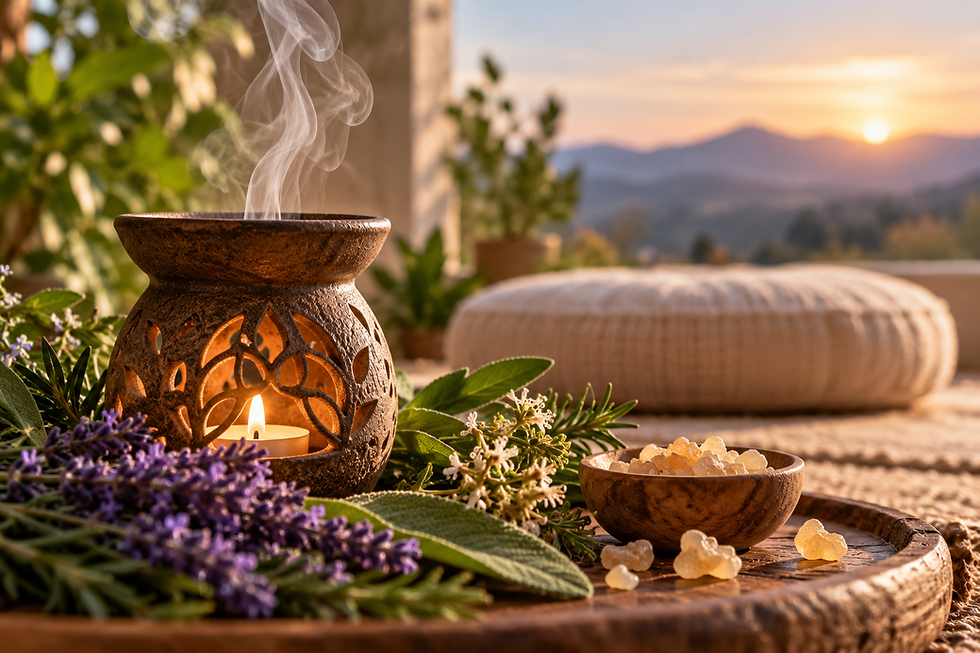
Leaves were crushed. Resins were burned. Flowers were steeped into oils and waters. Fragrant woods entered temples, homes and burial rites. Aroma belonged to medicine, beauty, ceremony, trade and ordinary life long before the modern word aromatherapy existed.
The history of aromatic plants is therefore not the history of one practice. It is the story of many cultures discovering that plants could change the atmosphere around the body—and sometimes the meaning of a moment.
The History of Aromatherapy: From Ancient Aromatic Plants to Modern Practice
The term aromatherapy is relatively modern. Ancient Egyptians, Greeks, Romans, Indians, Chinese and other peoples did not practice twentieth-century aromatherapy under another name.
They developed their own traditions involving incense, infused oils, perfumes, fumigation, bathing and botanical preparations.
Keeping that distinction allows the history to remain rich rather than forcing many cultures into one modern category.
Why Fragrance Mattered
Aromatic plants were useful because scent travels.
A small amount of resin placed on heat could transform a room. Flowers and herbs could perfume oils. Fragrant woods could linger on clothing and objects.
Because smell is closely tied to emotion and memory, repeated aromas could also become associated with particular people, places and ceremonies.
Ancient Egypt and Fragrant Materials
Ancient Egyptian culture made extensive use of aromatic materials in perfumery, temple practice, body care and funerary contexts.
Plant oils, resins and other fragrant ingredients could be combined into complex preparations.
It is tempting to call every ancient fragrant mixture an essential-oil blend, but many were infusions, ointments or incense preparations rather than steam-distilled essential oils in the modern sense.
Kyphi and the Mystery of Ancient Incense
One of the best-known aromatic preparations associated with ancient Egypt is kyphi, a compound incense known through historical descriptions.
Recipes varied across sources and periods, and attempts to recreate kyphi today should not be mistaken for one perfectly preserved universal formula.
What remains clear is that fragrance could be crafted intentionally from multiple botanical materials to create a distinctive ceremonial experience.
Mesopotamia and Early Perfumery
Ancient Mesopotamian records provide fascinating evidence of skilled work with aromatic substances.
A cuneiform tablet from the second millennium BCE names a woman called Tapputi, often discussed in histories of perfumery because the text describes her work with aromatic materials and processing techniques.
Her story reminds us that sophisticated fragrance making belongs deep in human history.
India and the Aromatic World of Ayurveda
India developed extensive traditions around fragrant woods, herbs, flowers, oils and incense.
Ayurvedic practice has long understood plants through qualities, preparations and individualized contexts rather than reducing them to isolated modern essential-oil claims.
Sandalwood, for example, has held religious, cosmetic and traditional significance far beyond its modern use in fragrance.
China and Aromatic Botanical Traditions
Chinese botanical traditions also incorporated fragrant plant materials in medicine, incense culture and daily life.
As elsewhere, these practices should be understood within their own historical systems rather than retroactively labeled aromatherapy.
The recurring human interest in fragrant plants is the connection; the traditions themselves remained distinct.
The Mediterranean World
Greek and Roman societies used perfumes, aromatic oils, baths, resins and herbs in ways that intersected with medicine, luxury, hygiene, worship and social identity.
Trade brought valuable aromatic materials across long distances, linking fragrance with geography and wealth.
A scent could carry the trace of a landscape the wearer might never see.
Frankincense and the Incense Routes
Few materials reveal the relationship between fragrance and trade as clearly as frankincense.
Resin from Boswellia trees moved through networks connecting southern Arabia and surrounding regions with distant markets.
Our article on frankincense explores how one tree resin became entangled with trade, sacred atmosphere and modern aromatherapy.
Myrrh: Frankincense's Famous Companion
Myrrh is another aromatic resin with a long history in trade, perfumery and ritual.
It comes from trees in the genus Commiphora and has a deeper, earthier aromatic character than many frankincense materials.
Frankincense and myrrh are often paired in Western imagination, but each has its own botanical sources, trade history and cultural meanings.
Sacred Smoke
Burning aromatic material changes space visibly and invisibly.
Smoke rises while fragrance spreads beyond the object that produced it. It is easy to understand why many religious traditions found symbolism in that transformation.
The meaning of incense differed among cultures, but the sensory power of fragrant smoke repeatedly became part of ritual life.
Perfume Was More Than Decoration
Fragrance could signal status, cleanliness, sensuality, hospitality, devotion or preparation for ceremony.
Aromatic oils also provided a way to carry scent on the body without modern alcohol-based perfume.
The history of perfume therefore overlaps with the histories of cosmetics, medicine, religion and trade.
How Were Ancient Aromatics Extracted?
People used multiple methods, including crushing, heating, soaking botanical material in fats or oils, pressing, burning and other forms of extraction or preparation.
Distillation technologies developed over time, but we should be cautious about imagining modern essential-oil production operating unchanged in the distant ancient world.
The preparation determines what compounds end up in the finished material.
The Rise of Distillation
Advances in distillation across the medieval Islamic world played an important role in the history of aromatic waters, perfumery and later essential-oil production.
Scholars and craftspeople refined apparatus and techniques that helped transform how volatile plant materials could be collected.
This history forms a bridge between ancient botanical fragrance and the bottles familiar to us today.
Rose Water and Aromatic Waters
Aromatic waters became important products in their own right.
Rose water, for example, developed culinary, cosmetic, medicinal and ceremonial uses across different regions and periods.
Modern aromatherapy sometimes focuses so heavily on essential oils that hydrosols and aromatic waters are forgotten, even though they carry their own long histories.
Medieval Gardens and Apothecaries
Across medieval societies, aromatic herbs appeared in gardens, household preparations, religious spaces and medical traditions.
Plants such as rosemary, sage, mint and lavender belonged to living systems of use rather than decorative collections of essential-oil bottles.
The garden itself was part of aromatic knowledge.
Lavender's Long Journey
Lavender became deeply embedded in European fragrance and household traditions.
Its modern association with relaxation is only one chapter in a much larger botanical story.
Our lavender essential oil guide follows the plant from its history into contemporary aromatherapy.
From Perfumery to Modern Aromatherapy
The modern aromatherapy movement developed in the twentieth century, drawing together essential-oil use, massage, fragrance and various therapeutic ideas.
One frequently cited figure is French chemist René-Maurice Gattefossé, whose work helped popularize the term aromathérapie.
Modern aromatherapy has since developed along several paths, including clinical, beauty, massage, holistic and home-use traditions.
The Famous Lavender Burn Story
A popular aromatherapy story says Gattefossé accidentally burned his hand and plunged it into lavender oil, discovering its healing power.
Versions of this story are often repeated with dramatic detail, but popular retellings can exceed what historical documentation securely establishes.
The broader documented point is that Gattefossé investigated essential oils and helped shape modern aromatherapy writing.
Ancient Use Is Not Automatic Scientific Proof
A plant's long history can tell us that people valued it, traded it, prepared it and incorporated it into cultural practices.
History alone does not establish that every modern therapeutic claim about that plant is scientifically proven.
We do not have to choose between respecting traditional knowledge and asking careful modern questions. Both can deepen understanding.
Scent as Cultural Memory
Fragrance can preserve culture in an unusual way.
An incense used repeatedly in a sacred setting, a flower associated with celebration or an herb used in a family home can become part of collective as well as personal memory.
The biology behind scent and memory helps explain why aromas can feel like doors into another time.
What Ancient Aromatics Can Teach Us Now
Modern essential oils are convenient. That convenience can separate us from the plants.
Ancient aromatic traditions invite us to notice the resin before the bottle, the flower before the extract, the tree before the perfume and the people who learned how to prepare these materials long before industrial production.
A Different Way to Explore Aromatherapy
Choose one essential oil you own and research the actual plant behind it.
Where does it grow? Which part is distilled? How much plant material is required? Was the plant historically used in the same form, or has its preparation changed?
These questions turn a bottle into a doorway.
Where Ancient Wisdom Meets Aroma
Antara Veda's Ancient Wisdom work often begins with old texts and forgotten ideas. Aromatic history reminds us that wisdom was also carried through the senses.
Knowledge lived in gardens, workshops, trade routes, temples and kitchens. It was smelled, touched, prepared and passed from one generation to another.
The Invisible History Around Us
Open a bottle of lavender, frankincense, peppermint or sandalwood and the aroma arrives in seconds.
What is easy to miss is everything behind it: soil, climate, harvest, craft, commerce, ceremony, memory and centuries of human curiosity about fragrant plants.
Modern aromatherapy is one recent chapter in that much longer story.
The scent in the room may be new to us. The human impulse to pause and notice it is very old.

$50
Product Title
Product Details goes here with the simple product description and more information can be seen by clicking the see more button. Product Details goes here with the simple product description and more information can be seen by clicking the see more button

$50
Product Title
Product Details goes here with the simple product description and more information can be seen by clicking the see more button. Product Details goes here with the simple product description and more information can be seen by clicking the see more button.
$50
Product Title
Product Details goes here with the simple product description and more information can be seen by clicking the see more button. Product Details goes here with the simple product description and more information can be seen by clicking the see more button.


Comments